

Adventure, creativity, endurance, longevity, loving support, self-awareness, pushing my edge.
There are certain experiences in life that make you feel completely, unmistakably alive.
For me, they happen in the mountains.
They happen when the outcome isn't guaranteed. When the terrain is unfamiliar. When the days are long, the weather is unpredictable, the body is tired, and you must pay attention to your surroundings, to the person beside you, and to yourself.
This summer, my husband, Wynn, and I celebrated our 30th wedding anniversary by hiking the Alta Via 1 through the Dolomites.
We designed our own route. We designed our own training. We committed to the preparation and then stepped into the unknown.
Six and a half days. Approximately 83 miles. More than 25,000 feet of elevation gain and over 29,000 feet of elevation loss.
There were steep climbs, technical descents, exposed sections, thunderstorms, incredible food, tired bodies, laughter, beautiful strangers, horses, cows, and some of the most spectacular landscapes I have ever experienced.
But what I brought home with me wasn't about the miles.
It was a deeper understanding of my body, my capacity, and myself.
And one realization in particular surprised me:
I felt better than I did ten years ago.
Knowing the Edge
Wynn and I met in 1994 while leading wilderness trips together. Since then, most of our favorite moments have been spent in the mountains exploring trails, challenging ourselves, and learning more about ourselves and each other along the way.
Ten years ago, we celebrated our 20th anniversary on the Tour of Mont Blanc (TMB), completing it in four and a half days.
We were younger then.
We were also different.
We remember the end of that trip vividly. The long descent was brutal on my right knee. I've had three surgeries on that knee, and while it generally tolerates climbing well, steep, sustained downhill terrain has historically been my greatest physical challenge.
So, when I started thinking about the Alta Via 1, I knew where my edge was.
It wasn't whether I could climb.
It was whether my body could handle the cumulative demands of steep, technical descents after days of hiking through rugged terrain.
That distinction changed how I prepared.
Rather than simply hoping my knee would be okay, I trained specifically for the demand I knew could limit me.
Train for What You Actually Want to Do
This is where my personal experience and professional work intersect.
My career has been built around understanding human performance through exercise physiology, strength and conditioning, sport science, recovery, coaching, and the individual factors that influence how humans adapt.
So, we looked at the actual demands of the Alta Via 1 and built our preparation around them.
Our training hikes were long and intentionally challenging. We accumulated elevation. We spent time on technical terrain.
And this time, I added very specific strength training for downhill resilience, this is something I had not done with this level of intention in the past.
We also committed to recovery.
Yoga. Nutrition. Sleep. Time outside. And paying attention to the things in our lives that either supported us or depleted us.
We didn't train perfectly. We trained consistently.
We adapted when life got in the way.
And we stayed committed to the goal.
That is something I believe deeply in both personally and professionally:
Preparation isn't about creating perfect conditions. It is about building the capacity to respond when conditions aren't perfect.
Then You Have to Live It
Once you step onto the trail, preparation becomes experience.
And experience rarely follows the plan exactly.
On our second day, we covered nearly 17 miles and climbed approximately 6,800 feet.
It was our biggest day.
And my stomach decided it wanted nothing to do with it.
For most of the day, I dealt with significant gastrointestinal distress. I couldn't eat normally. By the time we reached the rifugio that evening, I was exhausted and in pain and skipped dinner completely.
It wasn't what we planned.
But it was something I knew how to navigate.
Years of working around endurance athletes and my own experiences in the mountains had taught me that sometimes the body gives you information you need to respect. You don't necessarily need to stop. You may need to slow down, change the plan, manage what you can, and stay present.
Wynn knew this territory, too. He has completed multiple 100-mile mountain ultramarathons and has had his own share of difficult stomach issues during races.
He was incredibly supportive while giving me the space I needed.
We communicated.
We adjusted.
We kept going.
The next morning, I focused on hydration and electrolytes. We had a shorter day ahead, so we slowed our pace and allowed my body to recover.
And it did.
By the following day, I was feeling good again.
Knowing your body isn't just knowing how hard you can push. It is knowing when to adapt.
The Edge Keeps Moving
There were plenty of moments on the Alta Via 1 when we had to make decisions.
The weather could change quickly. We encountered a thunderstorm and lightning. There were steep, exposed sections and technical terrain. Sometimes the trail was exactly where we expected it to be. Sometimes it wasn't.
We learned to enjoy the uncertainty while keeping our wits about us.
We talked.
We listened to each other.
We considered the information in front of us and made the most intelligent decision we could in that moment.
And then we moved forward.
That ability to remain present, curious, and clear when things aren't certain is performance, too.
Not everything that matters can be measured by a VO₂ max, a strength number, a pace, or a finish time.
Those measures matter. I love data. I believe in using physiological data to understand the body and inform decisions.
But the human being behind the data matters just as much.
The Downhill
On our sixth day, our 30th wedding anniversary, we reached the descent I had been thinking about for months.
We had already climbed through beautiful terrain, crossed exposed sections, scrambled over rocky trail, and accumulated thousands of feet of elevation.
Then came the descent.
Steep.
Long.
Technical.
The exact kind of terrain that had concerned me before the trip.
And then something remarkable happened.
My knee was okay.
Not perfect. Not invincible.
It was okay.
In fact, it was dramatically better than it had been ten years earlier on the TMB.
We kept talking about it.
My knee doesn't hurt.
After remembering how painful that descent had been on the TMB, this felt almost unbelievable.
And yet, it wasn't unbelievable at all.
We had identified the demand.
We had trained for it.
We had built capacity.
We had recovered.
We had adapted.
And then we tested that preparation in the real world.
The result wasn't luck. It was adaptation.
Better a Decade Later
The biggest surprise of the Alta Via 1 wasn't that I finished.
It was how good I felt while doing it.
I recovered better each day.
My energy levels were unprecedented.
We ate more because we needed more. We fueled for the demands rather than trying to restrict or control what our bodies needed.
Our preparation hikes had prepared us for the actual work.
My strength training had prepared my body for the downhill.
And something else had changed, too.
Over the past year, Wynn and I had put serious energy into how we communicate and how we care for ourselves and each other. We had become more intentional about what we allowed into our lives and had stepped away from relationships and inputs that were depleting us.
We were talking more.
Listening more.
Reflecting more.
Honoring ourselves and each other more.
That showed up on the trail.
We were more present with each other and more present in the place we were fortunate enough to be.
We could experience discomfort without immediately needing to fix it.
We could experience uncertainty without being consumed by it.
We could make a calculated decision and still have fun.
And somewhere along the way, I realized something I hadn't fully understood before:
I feel like the healthiest I have ever been in my life.
Body.
Mind.
Spirit.
At my age, I am not simply trying to maintain what I had when I was younger.
I am getting better.
Stronger.
Wiser.
More confident.
More capable.
And, perhaps most importantly, more myself.
Becoming More Fully Myself
There is another part of this experience that is harder to measure.
For much of my life, I have been very good at believing in other people.
I see their potential.
I see what is possible for them.
I invest in them.
I encourage them.
I help them find their edge.
But somewhere along the way, I realized that I hadn't always extended that same belief to myself.
Of course, I have had confidence. I wouldn't have attempted many of the things I have done without it.
But confidence to attempt something isn't the same as fully believing in yourself.
The Alta Via 1 didn't give me confidence.
It gave me another opportunity to experience myself, to live inside my own capacity, to listen to myself, to honor what I needed, and to trust what I knew.
I came home feeling more fully myself.
And that may be the greatest performance outcome of all.
Longevity Is Living
I often think about longevity differently than simply adding years to life.
It is about having the capacity to live those years.
To hike.
To explore.
To love.
To create.
To contribute.
To keep learning.
To keep challenging ourselves.
To remain curious about what is possible.
To be fully present for the people and experiences that matter most.
Our Alta Via 1 adventure was one expression of that for me.
We planned it.
We trained for it.
We adapted.
We supported each other.
We pushed our edges.
We celebrated 30 years of marriage in a way that felt completely like us.
And we came home with something I didn't expect.
Not proof that I could still do what I did ten years ago.
Something better.
Proof that I am not the same person I was ten years ago.
I am still becoming.
This Is Why I Do This Work
I love physiology because it gives us a way to understand what the body is doing.
I love performance because it gives us an opportunity to apply that knowledge.
And I love coaching because the most interesting part isn't the data itself.
It's the person behind the data.
What are you preparing for?
What does your body need?
What capacity do you need to build?
What happens when the plan changes?
What does recovery look like for you?
And perhaps most importantly:
What do you want your body to allow you to do with your life?
For me, the answer is adventure.
It is being in the mountains with the person I love.
It is having the capacity to say yes to something difficult.
It is continuing to learn what my body can do that it couldn't, or wouldn't, do before.
It is discovering that the edge can move.
What Is Your Edge?
I wonder about this often in my work.
What is the thing you've been thinking about in the back of your mind?
The adventure you haven't committed to.
The physical challenge you aren't sure your body can handle.
The change you've been considering.
The version of yourself you sense is there but haven't quite stepped toward.
Maybe the goal isn't simply to accomplish the thing.
Maybe going after it is part of how you discover more of yourself.
Not by becoming someone else.
By becoming more fully who you already are.
That is what I believe performance can give us when we approach it thoughtfully.
Not simply more speed, more strength, or more output.
More capacity for living.
My work is about helping people understand their bodies, using physiology theory and evidence to make better decisions, build meaningful capacity, and connect that capacity to the life they actually want to live.
Because your body is not separate from your life.
It is how you experience it.
And sometimes, when we are willing to prepare, step into uncertainty, and push our edge, we discover that the edge has moved.
I know mine has.
Know your body. Elevate your performance.
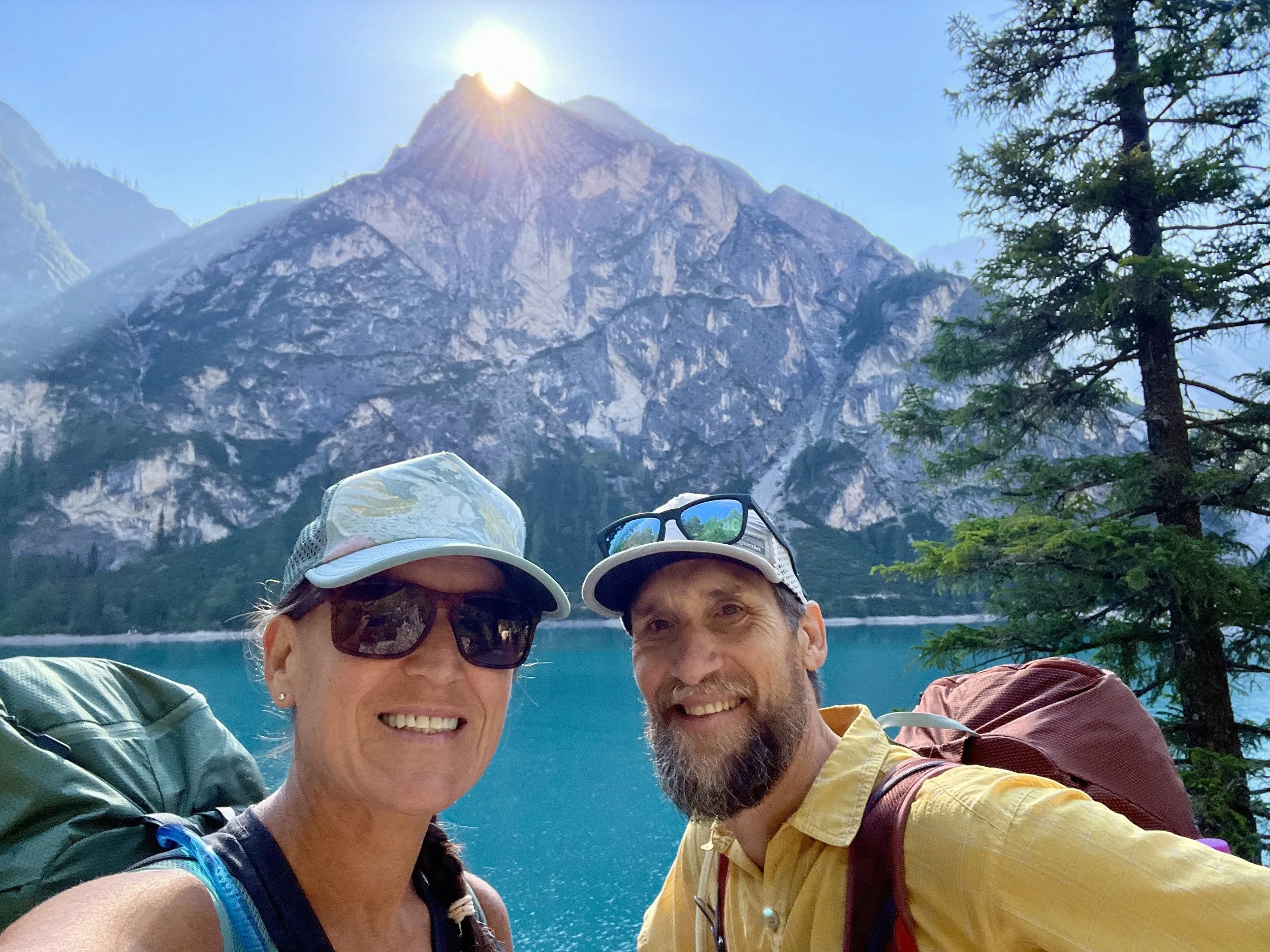
At the start, Lago di Braies.

One of the climbs on day 2, our longest day.

Chocolate cake on top of Lagozoui, highest point on the Alta Via 1.

Tofane di Rozes.

Everyday new views.

Our 30th Wedding Anniversary.

Time for the long descent, last full day of the route.
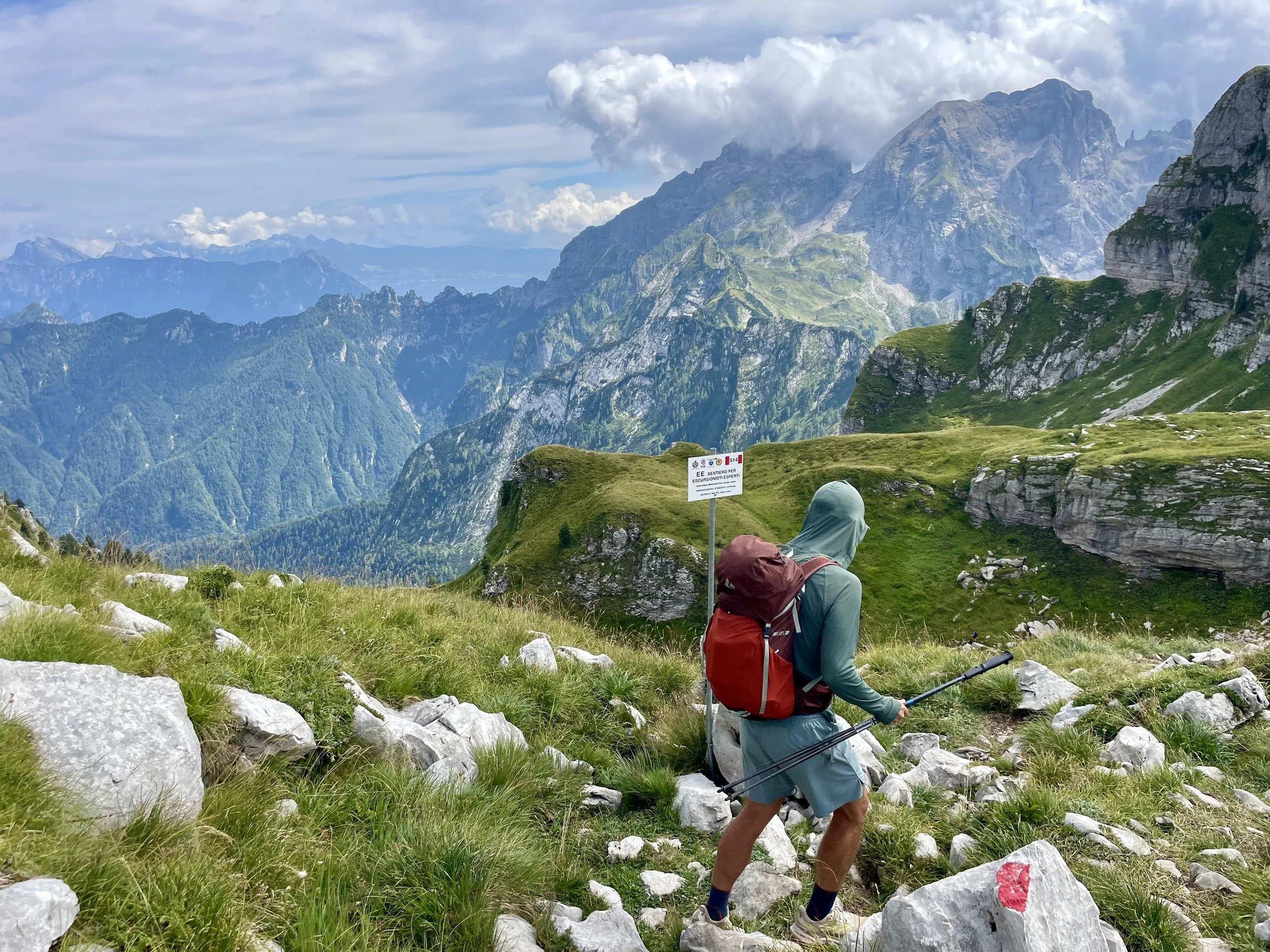
Intentional descending.

Final morning, Rifugio Bianchet.